Agencies Venture capitalBig tech Regulates an input
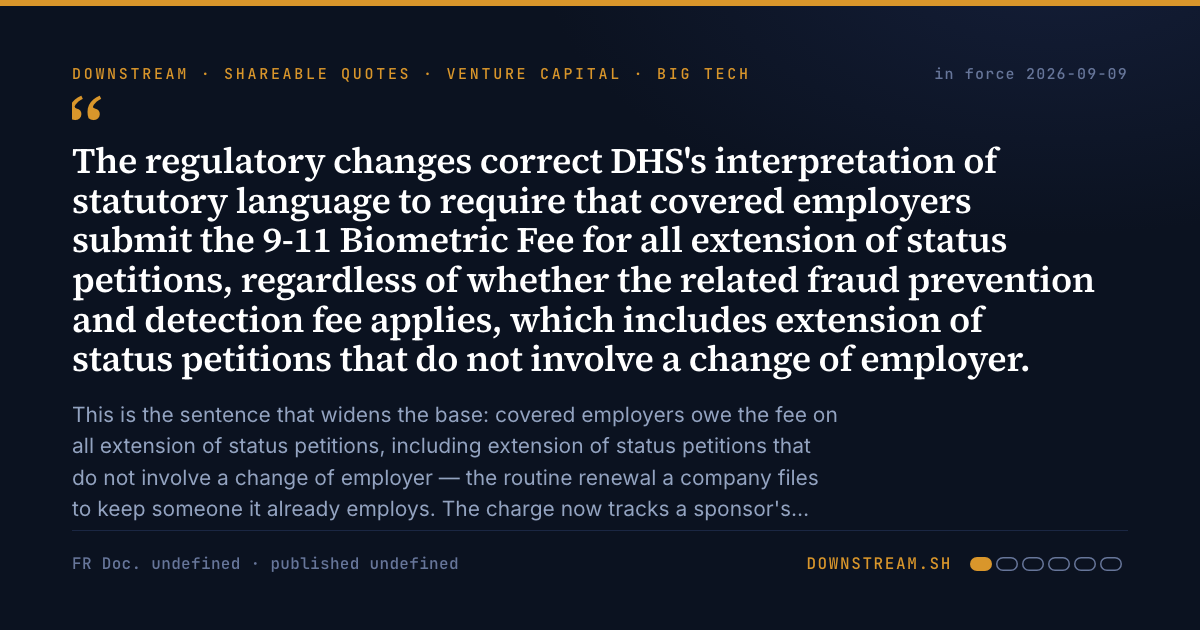
The regulatory changes correct DHS's interpretation of statutory language to require that covered employers submit the 9-11 Biometric Fee for all extension of status petitions, regardless of whether the related fraud prevention and detection fee applies, which includes extension of status petitions that do not involve a change of employer.
MechanismH-1B and L-1 petitions are the principal channel through which venture-backed startups and large technology companies sponsor skilled foreign hires, and this rule sets what those employers must pay per petition.
So whatThis is the sentence that widens the base: covered employers owe the fee on all extension of status petitions, including extension of status petitions that do not involve a change of employer — the routine renewal a company files to keep someone it already employs. The charge now tracks a sponsor's standing visa population, not just its new hires.
Already in force
Takes effect 9 September 2026 — 30 days after publication. The capture carries no comment window: on this one the input stage is over and what is left is the obligation.
Docket No. USCBP-2024-0009 · CBP Dec. No. 26-11
Same document“9-11 Response and Biometric Entry-Exit Fee for H-1B and L-1 V…”“The 9-11 Biometric Fee continues to apply unchanged to petiti…”
Selection rule: Read by hand from the Federal Register issue of 2026-08-10. No term search finds this one: the rule never names a sector, and the route runs through the visas a company sponsors.
Homeland Security Department 91 FR 51360 FR Doc. 2026-16231 published 2026-08-10 federalregister.gov ↗official PDF ↗
Post on X Post on LinkedIn Permalink